Why We’re Building a Pocket Radar (And Why You Should Too)
The SkyScan Project – An Open Source Pocket Scanner Defense System For the Masses.
Why We’re Building a Pocket Radar (And Why You Should Too)
By Claudia G. Petersen
Historically, if something was falling from the sky, you just needed a sturdy umbrella and perhaps a mildly aggrieved attitude toward the weather. Today, things are a bit more complicated. You now need to know if that speck on the horizon is a delivery drone carrying someone’s lukewarm takeout, or a piece of military-grade hardware with severe boundary issues.
Welcome to the project. Let’s talk about leveling the playing field.
Currently, we have a rather rude asymmetry in the world. High-end, military-specification drones—the kind that watch, track, and occasionally strike—are marvels of billion-dollar engineering. They are designed to be invisible and untouchable. The people they are usually watching? Normal people. People with normal budgets, standard-issue anxieties, and exactly zero access to the multi-million-dollar radar arrays required to spot these things coming.
I don’t know about you, but I find that power dynamic exceptionally tacky.
So, we are going to fix it. We are building a handheld drone scanner. It will be cheap enough to buy without checking your bank balance, simple enough to assemble on your kitchen table, and powered by code that belongs to absolutely everyone.
The Problem: Invisible Eyes
To understand how we beat them, you have to understand how they work. I promise this won’t require a degree in astrophysics.
Think of a drone like a highly anxious flying smartphone. It cannot operate in a vacuum. To fly, navigate, and send back video, it has to constantly “talk” to its operator or to a satellite. It does this using Radio Frequencies (RF). Even the stealthiest military drone has to whisper into the radio spectrum to get its instructions.
Our goal isn’t to hack the drone or shoot it down—we are writers and makers, not an artillery battalion. Our goal is simply to build a very, very good ear to listen for that specific, mechanical whisper. If we know it’s there, we can get out of the way.
The Solution: The £50 Early Warning System
Here is what this project is not: It is not a bespoke, factory-manufactured piece of tactical gear that requires an import license.
Here is what it is: A scavenger hunt of off-the-shelf electronics.
We are designing a scanner that anyone—and I truly mean anyone, even if your current technical expertise peaks at plugging in a toaster—can build. The ingredients are delightfully mundane:
- The Ear: A cheap “Software Defined Radio” (SDR) like the USB sticks available for mere dollars. Originally meant for watching digital TV on a computer, clever people realized these little sticks can be tuned to listen to almost any radio frequency on earth.
- The Brain: Either A Cellphone CPU/NPU/GPU/TPU or a standard, dirt-cheap microcomputer (think along the lines of a Raspberry Pi or an esp32). It processes the noise the ear hears.
- The Body: A case you can 3D print at your local library, or honestly, assemble out of a sturdy Tupperware container if things get dire.
You can order these parts from entirely innocuous online retailers. When the mail arrives, it won’t look like you’re building an early-warning radar. It will look like you’re trying to fix a broken stereo.
The Software: Open, Free, and Yours
Hardware is only half the battle. The magic is in the firmware—the instructions that tell our cheap little brain how to pick out the menacing hum of a military drone from the background noise of local Wi-Fi and Bluetooth.
This is where you come in. The firmware we are writing is entirely Open Source.
Why? Because the only thing better than outsmarting a monolithic defense apparatus is doing it for free, together. We are releasing the core code to get the scanner running, but we need the global community to help us refine it. We need the hackers in basement apartments, the engineering students, and the amateur radio enthusiasts to look at the code, say, “Claudia, this is terribly inefficient,” and then make it better.
We want you to add new frequency libraries. We want you to design sleeker 3D-printable cases. We want you to translate the assembly manual into every language spoken by people who need to look up at the sky with caution.
The sky is getting crowded. It’s time we gave ourselves the tools to see exactly who is up there.
Grab a coffee, order some parts, and let’s get to work.
Available for pre-order soon.
SkyScan
Outside USA? View international version.
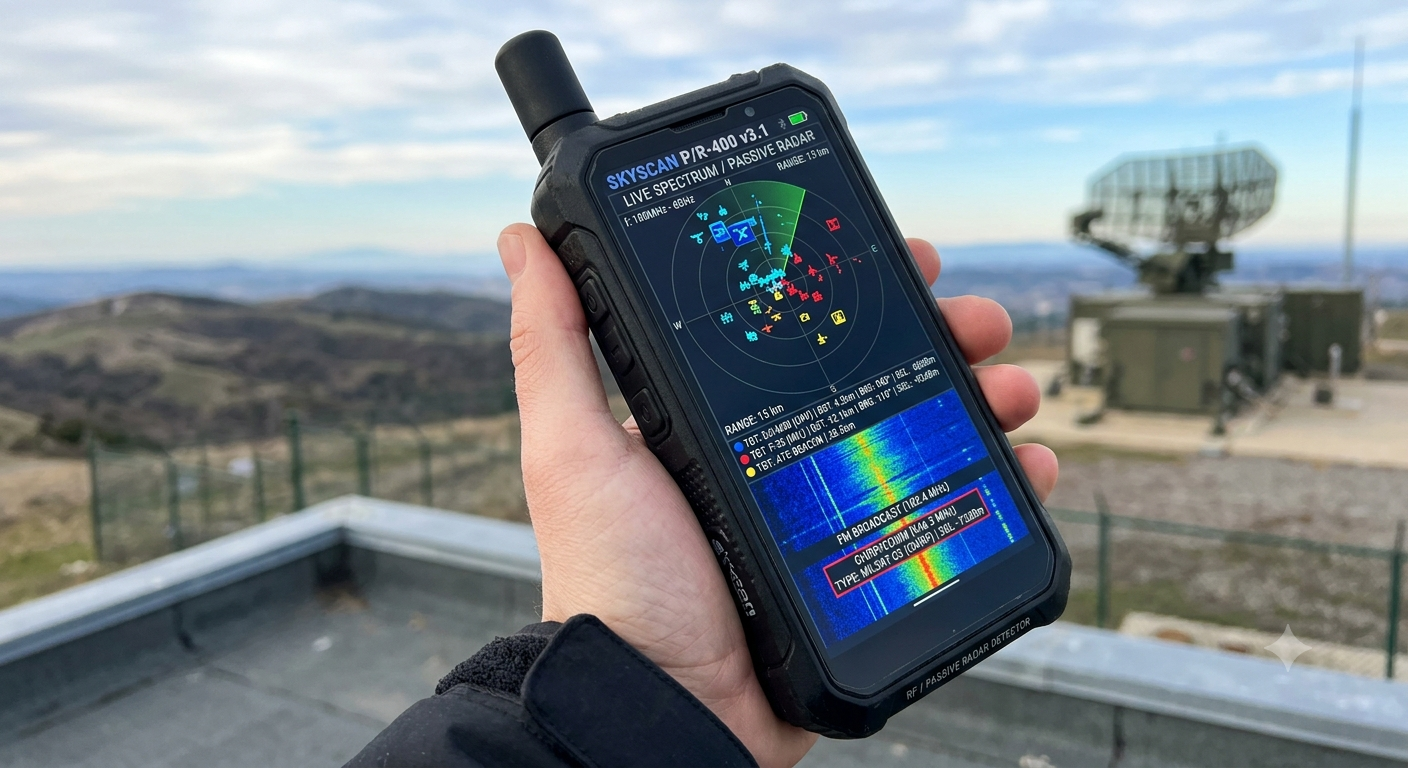
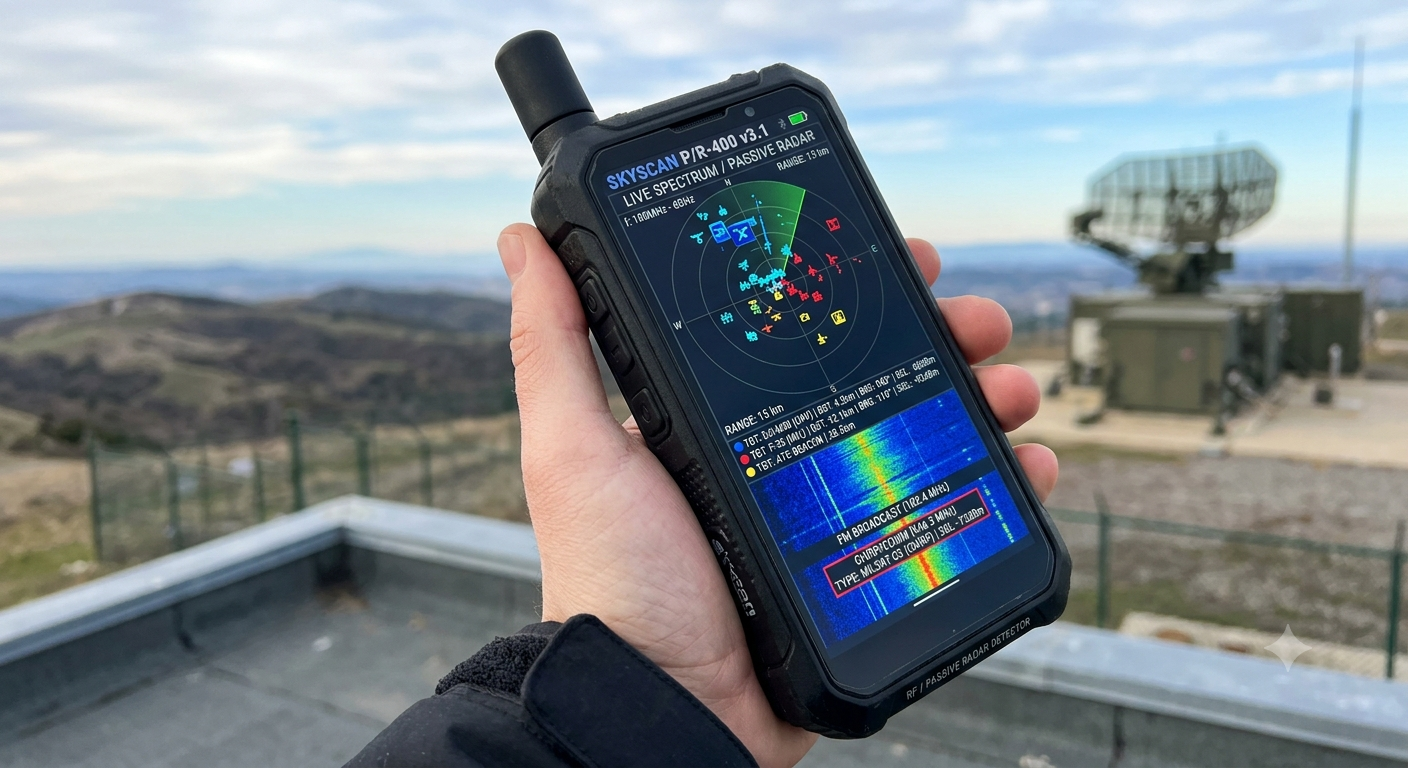
About the pictures
This project is at it’s very beginnings so i’m afraid we don’t have any glossy photographs to showcases the diverse array of screenshots that would capture the essence of different possible displays intended to be achieved on the scanner, reflecting the various outputs and information each possible screen will give. As a result here’s a temporary mockup of what we hope to eventually develop something similar to by project end. Each image in “SkyScan” will eventually be a real photograph of an actual unit or screen available accompanied by insightful commentary, providing historical context and revealing the stories behind the photographs. This collection will not only be a visual feast but also a tribute to the power of photography to preserve and narrate the multifaceted experiences of the devlopment of the unit this blog documents.
International versions
The SkyScan will be hopefully be available from these international sources.
Frequently Asked Questions
What is The SkyScan Project about?
This handheld scanner provides a passive radar scan display, passive rf waterfall display scan, control center for optional decoy units and optional jamming system attachment.
How much will the SkyScan cost?
It is hoped the main unit will cost less than $300 even to assemble from purchased PCB and ready made case etc., with home 3D printd cases and self etched PCBs offering further savings.
When will SkyScan be released?
Entriely unknown at this point – i only had the idea this morning and have barely begun but it would be nice to have the project in production within a couple of years maximum.
Will pre-built or kit-form units be available?
It would be nice to offer such things but it remains to be seen – it may only prove possible to supply instructions/guides/firmware etc.